
CEO Pay Gap and CEO Compensation: Why Consumer Brand Warnings Matter Now

Updated: Jun 11
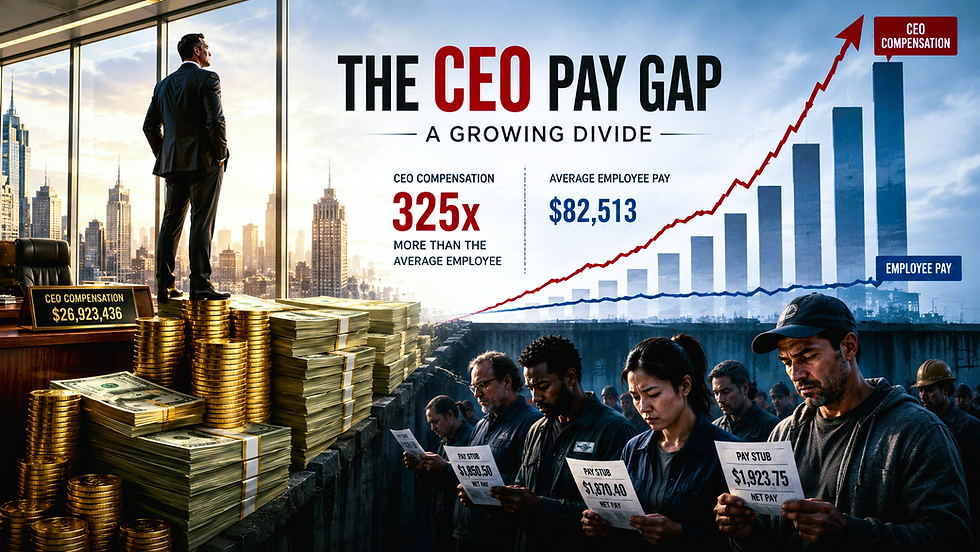
When some of the biggest consumer-facing companies in America start using the language of value, affordability, and budget pressure all at once, it is worth paying attention. Kraft Heinz has said its focus is on value and affordability for consumers under pressure. PepsiCo has talked about affordability initiatives and added value to the consumer. McDonald’s has leaned on value leadership as a key part of its message in what it calls a challenging environment. These are not isolated remarks. They suggest that many households are still trying to stretch every dollar further than the surface of the economy might imply.
CEO Pay Gap and CEO Compensation in Today’s Consumer Economy
What makes this more than a routine earnings-season theme is the contrast between what companies are saying about the customer and what the broader compensation data says about the executive class. The latest Associated Press and Equilar survey found that median CEO compensation at S&P 500 companies rose to $17.7 million in 2025, while the median employee at those same companies earned $89,744. At half the companies in the survey, it would take the worker in the middle of the company pay scale 200 years to make what the CEO made in one. Separate Equilar analysis published through Harvard’s corporate governance forum found the median CEO pay ratio rose from 210:1 in 2024 to 219:1 in 2025.
Why the Kraft Heinz Story Stands Out
Kraft Heinz stands out because the public language has been especially direct. In recent coverage of the company’s strategy, CEO Steve Cahillane was described as pushing harder on value as consumers run out of room late in the month. In Kraft Heinz’s official first-quarter materials, management said its focus was “very much on value,” that part of the consumer base is “under a lot of pressure,” and that the operating environment still includes increasing inflationary pressures and persistently low consumer sentiment. That combination matters because it does not sound like a company speaking to a relaxed consumer. It sounds like a company adapting to a customer base that is still financially squeezed.
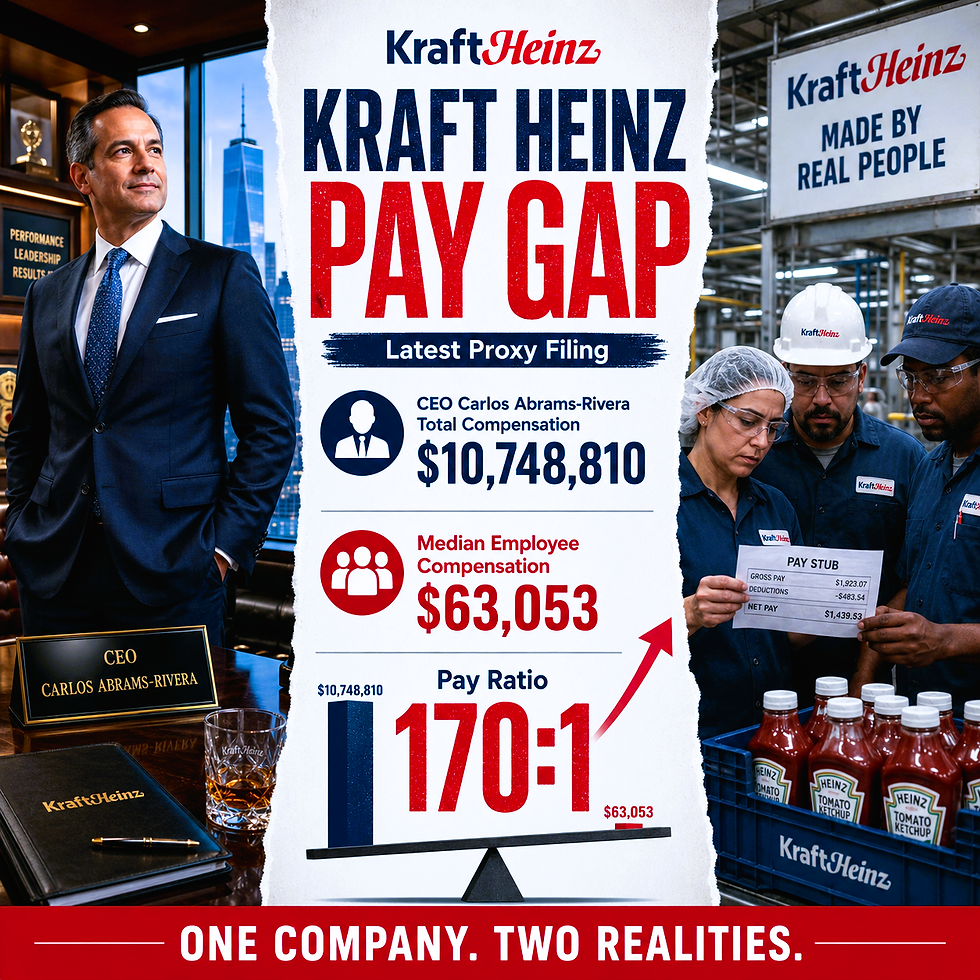
The CEO Pay Gap Is Not Abstract at Kraft Heinz
The latest Kraft Heinz proxy makes the contrast even harder to ignore. The filing shows then-CEO Carlos Abrams-Rivera received total compensation of $10,748,810 for 2025. The same filing lists the company’s median employee compensation at $63,053 and the disclosed pay ratio at 170:1. That does not automatically prove misconduct, and it does not mean every compensation package should be read as a moral failure. But it does show why the CEO pay gap keeps returning as a live issue when a company that sells everyday household products is also telling the market that affordability and opening price points matter more than before.
Why This Matters Beyond Fairness
The real force of the story is not just that executive pay is high. It is that companies are increasingly speaking as if consumer demand has become fragile. Kraft Heinz has been talking about value and affordability. PepsiCo has said it is offering sharper value to address consumer affordability dynamics and is investing in value. McDonald’s has said value leadership is central to serving what customers want, while AP reporting on the company noted concerns that higher gas prices could further pressure low-income demand. When brands start talking this way, the CEO pay gap becomes more than an inequality talking point. It becomes a clue that the customer is harder to hold than the headline numbers alone may suggest.
What Household Budget Stress Looks Like Right Now
Recent consumer reporting makes that picture even clearer. AP reported this week that many U.S. shoppers are rethinking where and how they spend as fuel and other costs hit budgets. Some are topping up instead of filling their tanks, buying more carefully, sticking to shopping lists, and cutting back on discretionary trips to clothing and furniture stores. The same reporting said lower-income customers are showing visible cutbacks, while Dollar General has also been drawing more traffic from households making over $100,000 as value-seeking behavior spreads upward. That is important because it suggests the pressure is not staying neatly confined to one narrow income band. The conversation about value is broadening because the stress is broadening.
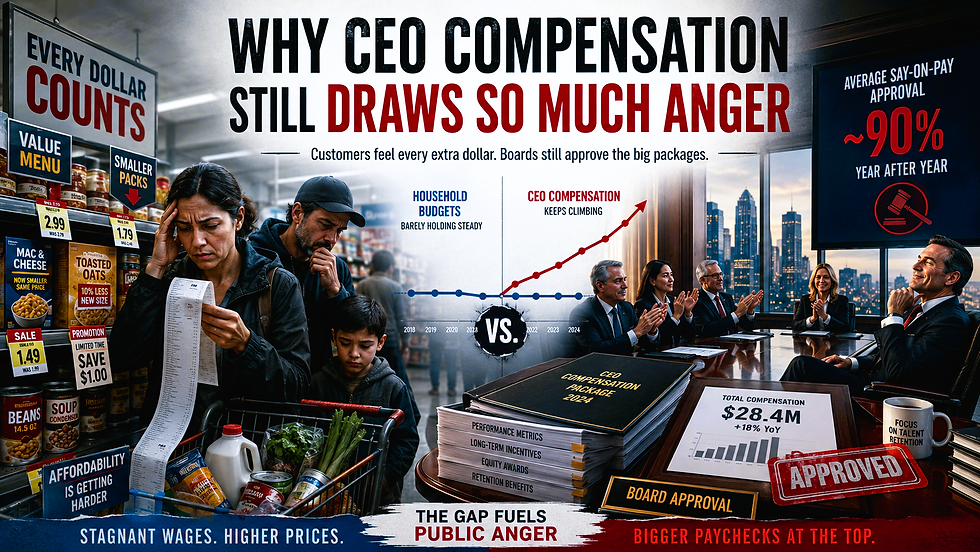
Why CEO Compensation Still Draws So Much Anger
Another reason this topic keeps gaining traction is that the public can see the contrast for itself. Companies talk about value menus, smaller packs, promotions, and affordability because they know customers are noticing every extra dollar. At the same time, boards are still approving large packages at the top. AP reported that the average “say on pay” approval in this year’s survey was around 90%. In other words, the system is not pulling back very much even while companies themselves are acknowledging that many households have to. That is a major reason CEO compensation remains emotionally and politically potent. People do not just hear the numbers. They hear the mismatch.
Final Takeaway
This is why the CEO pay gap is worth knowing about right now. Not because every executive package means the same thing, and not because every consumer warning points to immediate collapse. It matters because the public facts are moving in two directions at once. On one side, major brands are telling investors that affordability, value, and household pressure are real. On the other, CEO compensation remains elevated and the gap between executive pay and worker pay continues to widen. That divergence is where the real story lives. It is also the kind of moment Quincy is useful for reading: not by inventing facts, but by noticing when the surface message and the underlying pressure no longer sound like the same economy.
If information is Power, then identifying and exposing hidden constraints is a Superpower.
Which would you rather have driving your business decisions?



Comments